
Guide
How to tell real batana oil from a blend
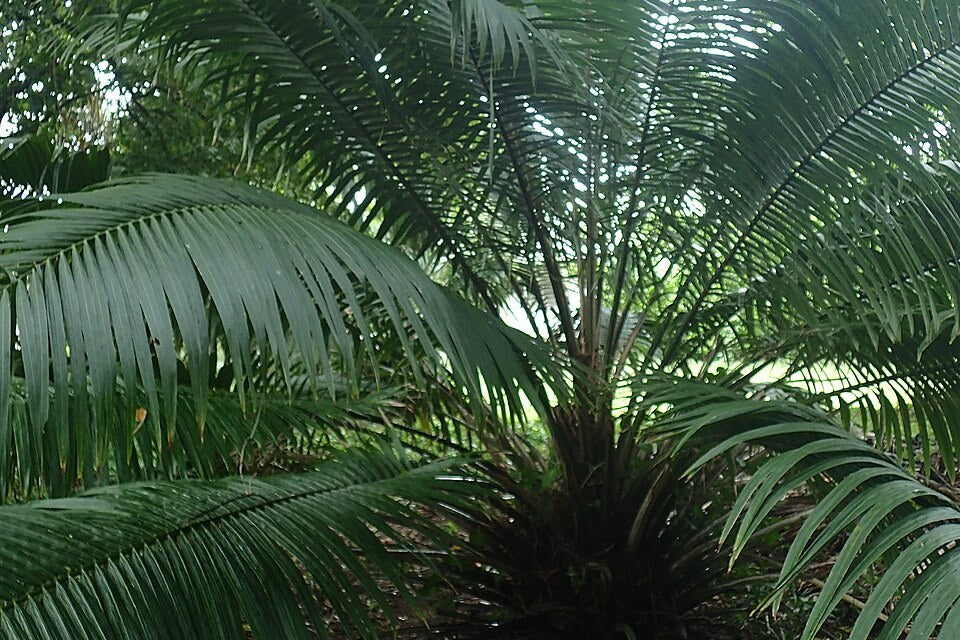
"Is this jar even real?" is the question we hear more than any other about batana. Customers ask it after a jar that smelled of nothing or felt like petroleum jelly. This guide sets out what can actually be known, what you can check yourself, and the one laboratory test that settles it. It is the practical companion to our longer evidence review on batana oil, and every claim has a numbered source at the end.
In brief
- Nobody has measured how much of the batana sold online is diluted or fake. We found no peer-reviewed study, regulator notice or independent lab test of retail batana; the warnings all come from sellers, ours included.
- A label cannot prove it. The ingredient name "Elaeis Oleifera Kernel Oil" is defined in the European Union's cosmetic ingredient database as oil from the kernel of the African oil palm1, and words like "100% pure" can be printed "without any scientific proof"2.
- Real batana is a kernel oil, traditionally cooked out of the kernels over a fire, and it "cools into a thick paste"3.
- Worth checking at home: a single ingredient with its botanical name, plant part and country of origin4, a smoky or roasted smell5,4, a soft solid that melts in your hands2, and documents behind the origin claim.
- Color alone proves little. How dark a kernel oil turns depends on how hard it was heated6, and no independent source describes the color of batana.
- The test that settles it is a fatty acid profile by gas chromatography. Lauric and myristic acid as major components point to a kernel oil; about 55 percent oleic acid with almost no lauric acid points to oil from the fruit pulp7,8.
What real batana is
Batana is the oil from the kernel of the American oil palm, Elaeis oleifera, made by Miskitu families in La Mosquitia, in eastern Honduras. The first written record of it as a hair oil is a Smithsonian survey based on fieldwork from 1917 to 1922, which defines batana as "a hair oil made by the Miskito Indians of the kernel contained in the seeds of the oil palm."9
The traditional method, as MOPAWI's director described it in 2005: "The fruit is boiled and then pounded to remove the orange outer shell. The nuts are washed, sun-dried and cracked using a stone to release the kernel. These are cooked over a fire until the oil is extracted. Finally the hot oil is poured into glass bottles where it cools into a thick paste."3 No primary source we found describes pressing the kernels, grinding them or skimming the oil off water. Those steps appear in sellers' stories and in the West African method for ordinary palm kernel oil.
Two facts follow that matter for buyers. The orange pulp of the same fruit gives a different oil, liquid at room temperature and rich in oleic acid, which is not batana8. And the palm grows from Honduras south to Peru and Brazil10, where its oil goes by other names, such as caiaué11.
What is known about fakes
Very little, and none of it measured. We searched for peer-reviewed studies, regulator notices and independent laboratory tests of retail batana and found none. Claims that batana is commonly cut with mineral oil, palm kernel oil or shea butter come from competing sellers, and none of the ones we read cited a test. That does not make the claims false. It means nobody knows how common blending is.
Mixing is not new, though. When Eduard Conzemius surveyed the Mosquito Coast for the Smithsonian a century ago, the hair oils there were already being "mixed with foreign hair tonics, perfumes, and vaselines"9.
WebMD's conclusion is the honest one: "There's no way to know if your batana oil is real unless you have it tested in a lab."2 The checks below make a fake less likely. Only a lab can rule one out.
Why a label cannot prove it
Batana labels list the ingredient as "Elaeis Oleifera Kernel Oil." The European Commission's cosmetic ingredient database, CosIng, defines that name as "the oil expressed from the kernel of the Palmoil Tree, Elaeis guineensis," which is the African species, and files it under CAS number 8002-75-3, the number used for ordinary palm oil1. So neither the name nor the number on a label tells batana apart from palm oil.
Purity words carry no weight either. As WebMD explains, these products "aren't regulated by the FDA. This allows manufacturers to make claims like '100% raw,' '100% pure,' or 'natural and unrefined' without any scientific proof."2
Checks worth doing
1. The label
Look for one ingredient, with the botanical name (Elaeis oleifera), the part of the plant (kernel) and the country of origin. "Commercial batana oil is not always standardized," the clinical trichologist Emily DeNard told Parade. "She recommends looking for the botanical name, plant part, country of origin and, ideally, a certificate of analysis before buying," the magazine reports4. A long ingredient list, added fragrance or a vague "palm oil blend" means you are not buying batana on its own.
2. The documents
Ask the seller what documents stand behind the label, and who issued them. They prove different things:
- A certificate of origin, issued by a chamber of commerce, states which country the goods came from. It does not identify the species.
- A certificate of analysis with a fatty acid profile is the document that can show which oil is in the jar (see the test that settles it).
- An FDA cosmetic product listing under the 2022 cosmetics law (MoCRA) is a filing made by the company. The FDA does not review or approve it.
3. The smell: what real batana oil smells like
Traditional batana is cooked over a fire, and it smells like it. Cosmopolitan describes "a smokey, tobacco-like, earthy scent, but that tends to go away once you rub it in and doesn't linger."5 The trichologist Tina Mui describes a texture that is "thick and buttery with a distinctive earthy, roasted scent"4. Roasting palm kernels produces compounds with "nutty, caramelic and smoky" odors12, which would explain the smell, although batana itself has never been analyzed for it.
Our reasoning, untested: refining vegetable oils normally includes a deodorizing step, so a jar sold as unrefined batana that smells of nothing at all deserves a question to the seller. A strong perfume is a different warning sign, since batana is a single ingredient.
4. The texture
Batana is traditionally a paste that sets as it cools3; WebMD describes it as "a soft solid that melts in your hands"2. That fits a kernel oil. Palm kernel oil melts between 23 and 30 °C (73 and 86 °F)13, so it is firm in a cool room and turns to oil in warm hands or a hot bathroom. Oil pressed from the fruit pulp of the same palm is "liquid at room temperature"8. A jar that stays clear and runny in a cool room is therefore worth asking about, while one that softened in summer heat is behaving normally.
5. The color
Color is the check people trust most and the weakest one. We found no independent source that describes the color of batana; sellers variously call it golden, caramel and nearly black. Kernel oils start pale: unroasted palm kernel oil is "light yellow, but almost white when solid"13. Heat darkens them. In a 2026 study of traditionally roasted palm kernels, "both samples A and B exhibited a golden yellow color, however, sample B was slightly darker"6. A deep brown batana fits kernels cooked hard over an open fire, and a lighter one may simply have been heated more gently. Neither color proves anything on its own.
The test that settles it
A standard fatty acid profile by gas chromatography, which any oils laboratory can run, tells you which kind of oil is in a jar. Kernel oils of the oil palm genus are lauric oils: lauric acid is the most abundant fatty acid, followed by myristic and oleic acid, and the three make up 75 to 80 percent of the total7. The American palm's kernel oil has the same main acids but is "considerably more unsaturated" than African palm kernel oil14,15. Oil from the fruit pulp is a different fat, about 55 percent oleic acid with almost no lauric acid8. So:
- Lauric and myristic acid as major components mean a kernel oil.
- About 55 percent oleic acid with little or no lauric acid means fruit-pulp oil, which is not batana.
- A profile matching ordinary palm kernel oil, at about half lauric acid16, could be African palm kernel oil, or kernels from hybrid palms, which come out "close in fatty acid and triglyceride composition" to the African species17.
Telling the two species' kernel oils apart is harder. Their triglyceride patterns differ, so a specialist laboratory can in principle distinguish them17, but we found no validated authentication method for retail batana.
What we can show for our own jar
Since we are asking other sellers for documents, here are ours, summarized in full on our Ingredients, sourcing & product specifications page. The oil in our batana oil jars originates in Honduras, documented by a certificate of origin issued by a chamber of commerce. Our product and facility are listed with the US Food and Drug Administration under the cosmetics law (MoCRA) with its single ingredient declared as batana oil, Elaeis oleifera; a listing is a federal filing that the FDA does not review or approve. A safety data sheet on file records the composition as 100 percent batana oil (CAS 8002-75-3). The jars are filled and sealed at our packing facility, which is not in Honduras. Our batana is dark brown, smells strongly smoky and is a dense paste at cool room temperature (sold in 2 x 4.1 fl oz / 120 ml amber glass jars for $39.95, or $19.98 per jar).
Questions people ask
Is dark batana more real than golden batana?
Not necessarily. How dark a kernel oil turns depends on how much it was heated6, and no independent source sets a "correct" color for batana. A fatty acid profile tells you more than color does.
My batana turned liquid. Is it fake?
Probably not, if the room was warm. Lauric kernel oils melt at low temperatures; palm kernel oil melts between 23 and 30 °C (73 and 86 °F)13. If it sets again when it cools, that is normal for a kernel oil. An oil that stays runny in a cool room is a better reason to ask the seller for an analysis.
What does batana oil smell like? Why does mine smell like coffee or something burnt?
Smoky, earthy and roasted. Cosmopolitan calls it "a smokey, tobacco-like, earthy scent"5, and a trichologist quoted by Parade describes "a distinctive earthy, roasted scent"4. Traditional batana is cooked over a fire3, and roasted palm kernels give off compounds with nutty, caramel and smoky odors12. The smell usually fades once the oil is rubbed in5.
Does "100% pure" on the label mean anything?
It is not a regulated claim. Manufacturers can use words like "100% pure" and "natural and unrefined" "without any scientific proof"2. Ask for documents instead.
Is batana the same as palm kernel oil?
No. Palm kernel oil comes from the kernel of the African oil palm, Elaeis guineensis16. Batana comes from the kernel of the American oil palm, a different species, and its kernel oil is more unsaturated14. The two are related, and a jar of palm kernel oil sold as batana would be hard to spot without a lab.
Does real batana only come from Honduras?
The palm grows from Honduras to Peru and Brazil10. Batana as a hair oil is the tradition of the Miskitu of La Mosquitia9,18. The caiaué oil analyzed in Brazil in 2024 was pressed from the fruit pulp, a different oil8.
How do I use it once I have a jar I trust?
See the section on use in our evidence review: melt a small amount between your palms, work it through the lengths, keep it off your hairline if you break out easily, and patch test first.
References
- European Commission. CosIng cosmetic ingredient database: ELAEIS OLEIFERA KERNEL OIL (substance ID 86471). Accessed November 7, 2026. ec.europa.eu
- Gascón A. Batana oil for hair growth: what to know. WebMD. Medically reviewed by Stephanie S. Gardner, MD. September 14, 2025. webmd.com
- Munguía O (Director, MOPAWI), Collins J. Ojon oil. Footsteps 65. Tearfund; 2005. learn.tearfund.org
- Beck L. Experts reveal the truth about batana oil and its effects on hair growth. Parade (via AOL). September 6, 2026. Quotes dermatologist Brendan Camp, MD, and trichologists Kerry Yates, Tina Mui and Emily DeNard. aol.com
- Gillette B. Batana oil is popping off on TikTok. Cosmopolitan (via AOL). August 20, 2024. Quotes dermatologist Omer Ibrahim, MD. aol.com
- Yahaya ZS, Awwalu S, Builders PF, et al. Effects of kernel roasting on the physicochemical, compositional, thermal, and spectrometric profiles of palm kernel oil. Discover Chemistry. 2026;3:112. doi:10.1007/s44371-026-00578-9. doi.org
- Mozzon M, Foligni R, Tylewicz U. Chemical characteristics and nutritional properties of hybrid palm oils. In: Palm Oil. London: IntechOpen; 2018. doi:10.5772/intechopen.75421. Open access. doi.org
- Antoniassi R, Wilhelm AE, Guedes AMM, Faria-Machado AF. Bioactive compounds and composition of Elaeis oleifera mesocarp oil extracted by hydraulic pressing. Grasas y Aceites. 2024;75(3):2194. doi:10.3989/gya.0646241.2194. Open access. doi.org
- Conzemius E. Ethnographical Survey of the Miskito and Sumu Indians of Honduras and Nicaragua. Smithsonian Institution, Bureau of American Ethnology, Bulletin 106. Washington: Government Printing Office; 1932. Pages 27, 96 and 171. hdl:10088/15412. Smithsonian Research Online (PDF)
- Royal Botanic Gardens, Kew. Elaeis oleifera (Kunth) Cortés. Plants of the World Online. Accessed November 7, 2026. powo.science.kew.org
- Montoya Jaramillo C, Daza ES, Rincón V, et al. Biogeografía de Elaeis oleifera (Kunth) Cortés. Ceniavances 188. Bogotá: Cenipalma; 2018. In Spanish. Fedepalma publications
- Zhang W, Zhao F, Zhao F, Yang T, Liu S. Solid-state fermentation of palm kernels by Yarrowia lipolytica modulates the aroma of palm kernel oil. Scientific Reports. 2019;9:2538. doi:10.1038/s41598-019-39252-9. PubMed Central (full text)
- Hardon JJ, Rajanaidu N, van der Vossen HAM. Elaeis guineensis Jacq. In: van der Vossen HAM, Umali BE, eds. Plant Resources of South-East Asia No. 14: Vegetable Oils and Fats. Leiden: Backhuys; 2001. PROSEA
- Macfarlane N, Swetman T, Cornelius JA. Analysis of mesocarp and kernel oils from the American oil palm and F1 hybrids with the West African oil palm. Journal of the Science of Food and Agriculture. 1975;26(9):1293-1298. doi:10.1002/jsfa.2740260907. Abstract only. doi.org
- Lieb VM, Kerfers MR, Kronmüller A, et al. Characterization of mesocarp and kernel lipids from Elaeis guineensis Jacq., Elaeis oleifera [Kunth] Cortés, and their interspecific hybrids. Journal of Agricultural and Food Chemistry. 2017;65(18):3617-3626. doi:10.1021/acs.jafc.7b00604. PubMed (abstract)
- Codex Alimentarius Commission. Standard for Named Vegetable Oils (CODEX-STAN 210-1999), original text. Rome: FAO/WHO; 1999. Fatty acid ranges for palm oil, palm kernel oil and coconut oil. fao.org
- Tan BK, Berger KG. Characteristics of kernel oils from Elaeis oleifera, F1 hybrids and back-cross with Elaeis guineensis. Journal of the Science of Food and Agriculture. 1982;33(2):204-208. doi:10.1002/jsfa.2740330213. doi.org
- Hodgdon B, Sandoval C. The Moskibatana indigenous forest enterprise in Honduras. In: Pasiecznik N, Savenije H, eds. Effective Forest and Farm Producer Organizations. ETFRN News 57. Wageningen: Tropenbos International; 2015:23-30. ETFRN News 57 (PDF)
About the authors. Ancestica is a small, independent brand that makes one-ingredient Honduran batana oil and sulfate-free solid shampoo and conditioner bar sets. We write the Journal from published sources: every factual claim above links to the study, report or article it comes from, so you can check it yourself.
Disclosure. Ancestica sells cosmetic hair care products, so we have an interest in these subjects. We report the evidence as it stands, including where it is thin or pre-clinical. This article is for general information about cosmetic products and is not medical advice.