
Evidence review
Caffeine, turmeric, panthenol and rice water in shampoo bars: what hair studies actually show
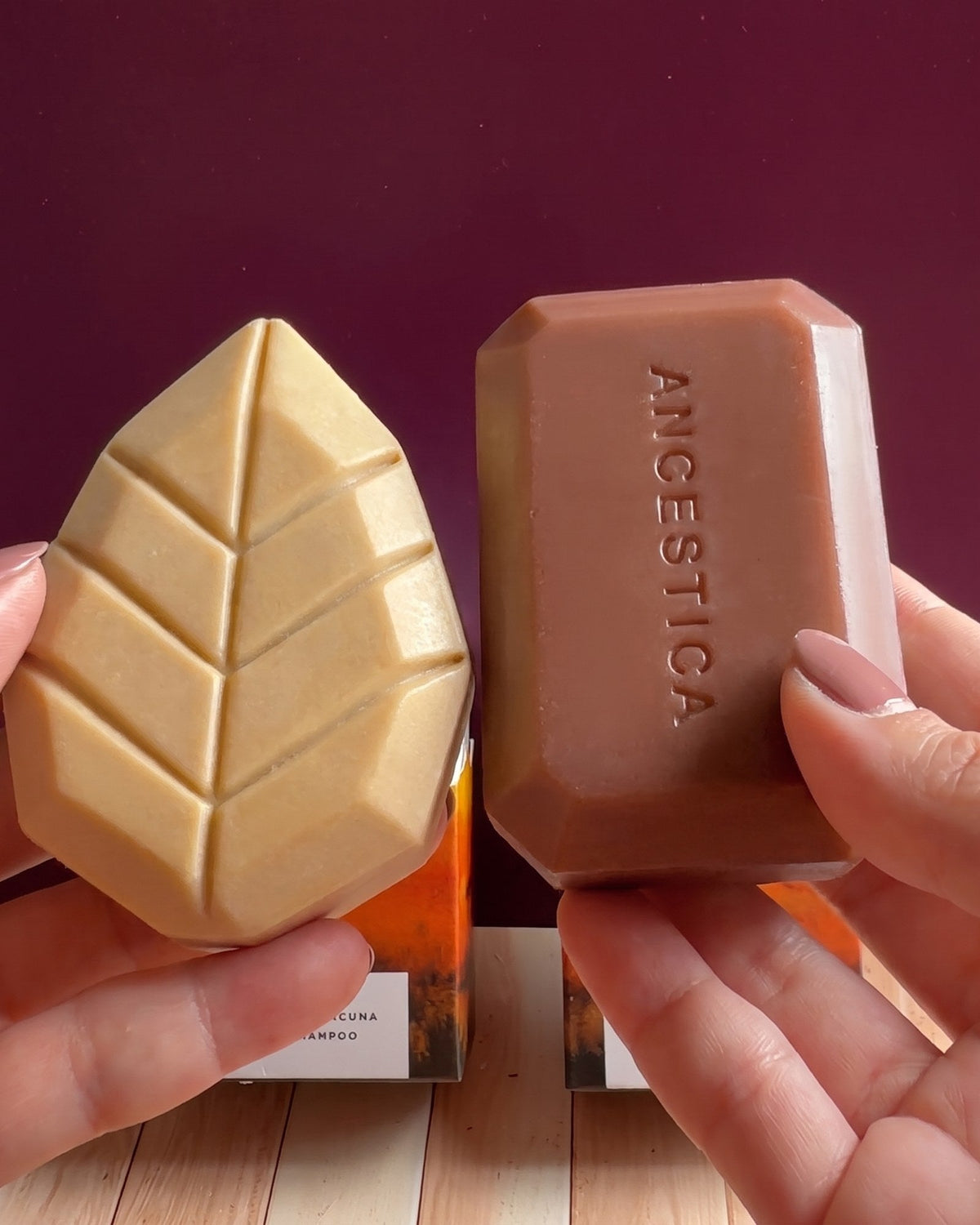
A fair question about any wash-off hair product is whether active ingredients can do anything meaningful in the two minutes before you rinse them down the drain. Some ingredients marketed in solid shampoo and conditioner bars have real human penetration and clinical studies behind them; others rest on laboratory hair-strand tests, cell cultures, or traditional hair-rinse heritage with zero clinical trials on the modern cosmetic derivative. Here is what the peer-reviewed literature actually shows for caffeine, curcuma (turmeric), panthenol, rice water versus hydrolyzed rice protein, jojoba oil and vitamin E, with every source linked so you can check it yourself.
In brief
- Can caffeine penetrate from a rinse-off shampoo? Yes: an in vivo human skin study demonstrated that caffeine applied in a shampoo formulation for 2 minutes penetrated into hair follicles, with follicles acting as the fastest pathway1.
- Clinical evidence on topical caffeine: human follicle organ cultures2 and a 6-month randomized double-blind shampoo study in women3 reported supportive findings. A 2025 systematic review of 9 clinical trials (684 participants) noted that all 9 studies reported positive outcomes for topical caffeine hair products, while grading 6 of the 9 studies as low or very low methodological quality and 3 as moderate, calling for larger independent trials4.
- Panthenol (provitamin B5) strengthens the hair fiber itself: a 2026 spectroscopic study found that panthenol penetrates into the hair shaft and interacts with hair proteins to improve mechanical fiber strength and resistance to breakage5.
- Rice rinse water vs hydrolyzed rice protein: a 2010 cosmetic-chemistry study tested traditional Japanese rice rinse water (Yu-Su-Ru) on hair strands and measured lower surface friction and higher elasticity6. Hydrolyzed rice protein, the modern cosmetic ingredient, has no published hair-growth clinical trial; its role in bars is conditioning and film-forming strength alongside panthenol.
- Ingredient studies are not finished-bar trials: none of the published studies below tested Ancestica's finished bars, and cosmetic shampoo bars do not diagnose or treat medical hair loss.
Summary table: what has been studied, and how
| Ingredient | Highest study level | What was measured | Important limitation |
|---|---|---|---|
| Caffeine | Human clinical trials & 2025 systematic review (9 studies, n = 684)1,3,4 | 2-minute shampoo follicular uptake1; fewer hairs pulled in 6-month female shampoo trial3; follicle elongation in vitro2 | 6 of 9 clinical trials rated low or very low quality, 3 moderate; many industry-sponsored4 |
| Curcuma (turmeric root) | Cultured human hair-root cells & mouse study7,8 | Curcumin protected cultured dermal papilla cells from dye-chemical oxidative stress7; microneedle delivery supported mouse hair cycling8 | Lab cell and microneedle animal data; not a human rinse-off shampoo trial |
| Panthenol (provitamin B5) | Human hair-strand spectroscopy & follicle cell culture5,9 | Penetrated hair cortex, bonded with proteins and increased strand break resistance5; supported cultured dermal papilla cells9 | Fiber strength is a cosmetic anti-breakage effect, not new follicle creation |
| Rice rinse water / rice protein | Laboratory hair-strand study on traditional rice rinse water6 | Yu-Su-Ru rice rinse water lowered surface friction and improved hair elasticity6 | Tested traditional rice rinse water; hydrolyzed rice protein itself has no clinical hair study |
| Jojoba seed oil | Laboratory study on chemically straightened hair10 | Protected chemically treated Afro-ethnic hair and limited protein loss10 | Ex vivo hair-tress conditioning study |
| Vitamin E (tocopherols / tocotrienols) | Topical mouse study & oral human capsule trial11,12 | Topical vitamin E extract supported mouse anagen cycling11; oral tocotrienol capsules increased hair counts over 8 months12 | Human trial used oral capsules, not a wash-off conditioner12 |
Topical caffeine: 2-minute follicular uptake and clinical trials
Caffeine is the most thoroughly studied cosmetic scalp active in wash-off shampoos. Four peer-reviewed publications define what is known and where uncertainty remains:
- Does it reach the follicle before you rinse? In a 2007 study in human volunteers published in Skin Pharmacology and Physiology, researchers applied a caffeine shampoo for 2 minutes, rinsed it off, and selectively blocked hair follicles in half the test sites to separate follicular uptake from skin-surface absorption1. Caffeine was detected in hair follicles right after the 2-minute contact window and remained detectable for up to 24 hours, showing that hair follicles serve as a fast shunt pathway even during a brief wash1.
- What happens in human hair follicles in the lab: in a 2014 British Journal of Dermatology organ-culture study using biopsied male and female human scalp follicles, caffeine counteracted testosterone-induced suppression of hair shaft elongation, stimulated matrix keratinocyte proliferation, and prolonged the anagen (growing) phase, with female follicles showing higher sensitivity at lower concentrations2.
- What happens in a 6-month shampoo study in women: in a randomized, double-blind, parallel-group study of women washing with a phyto-caffeine shampoo versus a control shampoo for 6 months, the caffeine shampoo group had significantly fewer hairs extracted in a standardized pull test and reported higher satisfaction on shedding intensity and hair strength3.
- What independent reviewers caution (the 2025 systematic review): a 2025 systematic review in Healthcare evaluated 9 clinical studies totaling 684 participants across caffeine shampoos and leave-on lotions4. While all 9 studies concluded in favor of topical caffeine preparations with good tolerability, the reviewers graded 6 of the 9 studies as low or very low methodological quality and 3 as moderate quality due to small sample sizes, subjective endpoints or lack of placebo blinding, calling for larger independent randomized trials4.
Curcuma (turmeric root): cell and animal models
Turmeric root extract (Curcuma longa), rich in polyphenols such as curcumin, has pre-clinical hair biology research rather than human shampoo trials. In a 2026 study on cultured human dermal papilla cells, curcumin helped protect hair-root cells against oxidative and mitochondrial stress triggered by para-phenylenediamine, a common oxidative hair-dye chemical7. In a 2023 mouse study in Theranostics, curcumin delivered via a zinc-framework microneedle patch supported hair-follicle cycling8. Because microneedles bypass the skin barrier and cell cultures sit in continuous contact, these studies show biological plausibility for scalp antioxidant support rather than clinical proof for a wash-off bar. At cosmetic wash-off levels, curcuma root extract rinses clean and suits every hair color without tinting light or gray hair.
Panthenol (provitamin B5): inside the hair shaft
Much of what people experience as "thinning lengths" is mechanical fiber breakage: scalp hair grows roughly 1 centimeter a month13, yet strands weakened by brushing, heat or dye snap off before they add visible fullness at the ends. Panthenol (provitamin B5) works directly on that structural problem:
- Inside the hair fiber: a 2026 study in the International Journal of Cosmetic Science used advanced spectroscopic techniques on human hair strands to track panthenol inside the cortex, showing that panthenol penetrates the fiber, forms interactions with hair keratin proteins, and increases fiber strength and resistance to breakage5.
- In cultured follicle cells: a 2021 laboratory study found that dexpanthenol reduced cellular senescence markers and supported proliferation in cultured human hair-follicle dermal papilla and outer root sheath cells9.
Rice rinse water vs hydrolyzed rice protein
Rice-based hair bars are widely searched online, and brands frequently blur two distinct things: traditional fermented or rinsed rice water and modern hydrolyzed rice protein. Keeping the record accurate matters:
- What was actually studied on hair: in Japan, washing hair with the cloudy rinse water from uncooked rice (Yu-Su-Ru) is a documented historical practice. A 2010 laboratory study published in the Journal of the Society of Cosmetic Chemists of Japan measured the effect of rice rinse water on hair tresses, reporting reduced surface friction and improved hair elasticity, attributed to starch/inositol-containing fractions coating the cuticle6.
- What has not been clinically studied: hydrolyzed rice protein (rice protein broken into smaller peptides so it dissolves cleanly in waterless cosmetic bars without spoiling) has no published clinical hair-growth study on PubMed or Crossref. In cosmetic formulation, hydrolyzed proteins act as substantive conditioning humectants that temporarily fill microscopic cuticle gaps so dry, brittle lengths bend more smoothly instead of snapping14.
Both of our solid shampoo formulas include rice ingredients alongside panthenol: our Rice Protein & Vanilla set carries both Hydrolyzed Rice Protein and Oryza Sativa (Rice) Extract for dry, snapping lengths, while our Caffeine & Curcuma shampoo bar pairs Caffeine, Curcuma Longa Root Extract and Panthenol with Hydrolyzed Rice Protein in one bar.
Jojoba oil, shea butter and vitamin E
Conditioner bars rely on concentrated lipids to replace the slip of liquid silicones without leaving waxy soap film:
- Jojoba seed oil (Simmondsia chinensis): in a controlled 2008 laboratory comparison of conditioning agents on chemically straightened Afro-ethnic hair, jojoba oil was among the most effective conditioners at protecting the hair fiber and limiting protein loss10.
- Vitamin E (Tocopherol): acts as an antioxidant protecting botanical lipids in the bar from oxidation; in pre-clinical skin research a natural vitamin E fraction promoted mouse follicle cycling11, while a well-known 2010 human hair trial tested oral tocotrienol capsules rather than a topical wash-off product12,15.
- Shea butter and vanilla fruit extract: shea butter provides rich emollient slip for coarse or dry ends, and vanilla fruit extract provides the soft scent in Rice Protein & Vanilla; neither has a hair-growth study, and we claim none for them.
Choosing between Caffeine & Curcuma and Rice Protein & Vanilla
Both versions of the Ancestica Solid Shampoo & Conditioner Bar Set include two full-size bars (a 100 g leaf-shaped syndet shampoo bar for the scalp plus a 90 g rectangular conditioner bar for the lengths, 190 g / 6.7 oz total for $34.99 or $17.50 per bar, $27.99 on monthly Subscribe & save), suit all hair types and colors, and contain zero sulfates, silicones, parabens or batana oil. Choose by your main hair concern and scent preference:
- Pick Caffeine & Curcuma if your priority is scalp focus, roots that look thin at the part, or wanting caffeine, curcuma, panthenol and hydrolyzed rice protein in one wash routine, and you enjoy a warm, lingering coffee scent.
- Pick Rice Protein & Vanilla if your priority is dry, heat-styled, bleached or fragile lengths that snap before they grow long, or if you prefer a soft vanilla scent over coffee.
For how syndet bars avoid hard-water residue and how to use them in the shower, see our guide to solid shampoo and conditioner bars. Full box-back INCI lists for all four bars are published on our Ingredients, sourcing & product specifications page. If you are experiencing sudden, patchy or rapid hair shedding, see a board-certified dermatologist rather than relying on cosmetic hair care16.
Questions people ask
Does caffeine in a shampoo bar stay on the scalp long enough to absorb?
Human follicular-penetration research found that caffeine from a shampoo left on the scalp for 2 minutes entered hair follicles and remained detectable for up to 24 hours1. Massage the lather into the scalp for a minute or two before rinsing.
Is rice water or caffeine better for hair that looks thin?
They target different problems. Topical caffeine has human follicular-uptake and pull-test shampoo studies at the scalp (rated low to moderate certainty in a 2025 systematic review)1,3,4, whereas rice rinse water and panthenol focus on smoothing and strengthening the hair shaft so lengths break less6,5. Our Caffeine & Curcuma shampoo bar includes caffeine, curcuma, panthenol and hydrolyzed rice protein together.
Does turmeric in the Caffeine & Curcuma bar stain blonde, gray or bleached hair?
No. Both our Caffeine & Curcuma set and our Rice Protein & Vanilla set rinse clean and suit every hair color, including blonde, silver and color-treated hair.
Are the Ancestica bars fragrance-free?
No. Every bar contains fragrance (Parfum): a warm coffee scent in Caffeine & Curcuma and a soft vanilla scent in Rice Protein & Vanilla. If you have fragrance sensitivity, patch test first17 or read the full ingredient lists on our specifications page.
References
- Otberg N, Teichmann A, Rasuljev U, Sinkgraven R, Sterry W, Lademann J. Follicular penetration of topically applied caffeine via a shampoo formulation. Skin Pharmacology and Physiology. 2007;20(4):195-198. doi:10.1159/000101389. PubMed (abstract)
- Fischer TW, Herczeg-Lisztes E, Funk W, Zillikens D, Biro T, Paus R. Differential effects of caffeine on hair shaft elongation, matrix and outer root sheath keratinocyte proliferation, and transforming growth factor-beta2/insulin-like growth factor-1-mediated regulation of the hair cycle in male and female human hair follicles in vitro. British Journal of Dermatology. 2014;171(5):1031-1043. doi:10.1111/bjd.13114. PubMed (abstract)
- Bussoletti C, Tolaini MV, Celleno L. Efficacy of a cosmetic phyto-caffeine shampoo in female androgenetic alopecia. Giornale Italiano di Dermatologia e Venereologia. 2020;155(4):492-499. doi:10.23736/S0392-0488.18.05499-8. PubMed (abstract)
- Szendzielorz E, Spiewak R. Caffeine as an active ingredient in cosmetic preparations against hair loss: a systematic review of available clinical evidence. Healthcare. 2025;13(4):395. doi:10.3390/healthcare13040395. PubMed Central (full text)
- Marsh JM, Cron S, Chen T, Talley A, Whitaker S, Jiang H, et al. Strengthening benefits of panthenol for hair: mechanistic evidence from advanced spectroscopic techniques. International Journal of Cosmetic Science. 2026;48(1):121-127. doi:10.1111/ics.70024. PubMed (abstract)
- Inamasu S, Ikuyama R, Fujisaki Y, Sugimoto K. The effect of rinse water obtained from the washing of rice (YU-SU-RU) as a hair treatment. Journal of the Society of Cosmetic Chemists of Japan. 2010;44(1):29-33. doi:10.5107/sccj.44.29. doi.org
- Ren Y, He J, Zheng L, Yue L, He C, Huang D, et al. Restoration of PPD-induced injury in iHDPCs via the OS-mitochondrial apoptosis pathway: screening and validation of natural compounds. International Journal of Molecular Sciences. 2026;27(20):9109. doi:10.3390/ijms27209109. PubMed Central (full text)
- Yang Y, Wang P, Gong Y, Yu Z, Gan Y, Li P, et al. Curcumin-zinc framework encapsulated microneedle patch for promoting hair growth. Theranostics. 2023;13(11):3675-3688. doi:10.7150/thno.84118. PubMed Central (full text)
- Shin JY, Kim J, Choi YH, Kang NG, Lee S. Dexpanthenol promotes cell growth by preventing cell senescence and apoptosis in cultured human hair follicle cells. Current Issues in Molecular Biology. 2021;43(3):1361-1373. doi:10.3390/cimb43030097. PubMed Central (full text)
- Dias TC, Baby AR, Kaneko TM, Velasco MV. Protective effect of conditioning agents on Afro-ethnic hair chemically treated with thioglycolate-based straightening emulsion. Journal of Cosmetic Dermatology. 2008;7(2):120-126. doi:10.1111/j.1473-2165.2008.00374.x. PubMed (abstract)
- Ahmed NS, Ghatak S, El Masry MS, Gnyawali SC, Roy S, Amer M, et al. Epidermal E-cadherin dependent beta-catenin pathway is phytochemical inducible and accelerates anagen hair cycling. Molecular Therapy. 2017;25(11):2502-2512. doi:10.1016/j.ymthe.2017.07.010. PubMed Central (full text)
- Beoy LA, Woei WJ, Hay YK. Effects of tocotrienol supplementation on hair growth in human volunteers. Tropical Life Sciences Research. 2010;21(2):91-99. PubMed Central (full text)
- Hoover E, Alhajj M, Flores JL. Physiology, hair. In: StatPearls. Treasure Island (FL): StatPearls Publishing; updated July 30, 2023. NCBI Bookshelf NBK499948. NCBI Bookshelf
- Gavazzoni Dias MF. Hair cosmetics: an overview. International Journal of Trichology. 2015;7(1):2-15. doi:10.4103/0974-7753.153450. PubMed Central (full text)
- Almohanna HM, Ahmed AA, Tsatalis JP, Tosti A. The role of vitamins and minerals in hair loss: a review. Dermatology and Therapy. 2019;9(1):51-70. doi:10.1007/s13555-018-0278-6. PubMed Central (full text)
- American Academy of Dermatology Association. Hair loss: tips for managing. Accessed November 7, 2026. aad.org
- American Academy of Dermatology Association. How to test skin care products. Last updated August 10, 2021. Accessed November 7, 2026. aad.org
About the authors. Ancestica is a small, independent brand that makes one-ingredient Honduran batana oil and sulfate-free solid shampoo and conditioner bar sets. We write the Journal from published sources: every factual claim above links to the study, report or article it comes from, so you can check it yourself.
Disclosure. Ancestica sells cosmetic hair care products, so we have an interest in these subjects. We report the evidence as it stands, including where it is thin or pre-clinical. This article is for general information about cosmetic products and is not medical advice.