
Guide
How to use batana oil for hair: amounts, timing, wash-out and shelf life
Most bad experiences with unrefined batana oil come down to treating a solid kernel butter like a liquid hair serum. Scoop too much, skip melting it in your hands, or pile it onto fine strands, and it feels heavy and takes multiple shampoos to remove. No laboratory study has tested batana oil itself on human hair, so every practical step below is built from what hair-oil research shows for other plant oils and what we know about kernel fats. Each factual claim links to its source at the end.
In brief
- Always melt it first: warm a pea- to teaspoon-sized amount between your palms until it turns clear and liquid. In laboratory testing, unmelted raw butters made hair harder to comb, whereas liquid oils cut wet combing force by about 60 percent1.
- Best used before washing: apply to dry hair 30 minutes to overnight before shampooing, the same pre-wash timing used when coconut oil reduced protein loss in laboratory testing2.
- Skip hot-oil heating if your hair is fragile: the American Academy of Dermatology advises against heated hot-oil treatments for fragile or thinning hair3. Warmth from your hands is enough, since lauric palm kernel fats melt between 23 and 30 °C (73 and 86 °F)4,5.
- How to wash it out cleanly: apply shampoo to dry, oiled hair before adding water, work it into a lather, rinse, and do a second wash. Wash hair at least every week or two to prevent drying buildup6.
- How long batana oil lasts: at 1 to 2 teaspoons a week, a 4.1 oz (120 ml) jar typically lasts 6 to 8 weeks of regular pre-wash use. In storage, keep the jar tightly closed away from light, heat and oxygen, the main drivers of oil oxidation7.
- Patch test first: test on a quarter-sized spot on your inner arm twice daily for 7 to 10 days before applying to your scalp8, and ask a dermatologist first if you have dandruff or seborrheic dermatitis9,10.
Why melting batana first matters
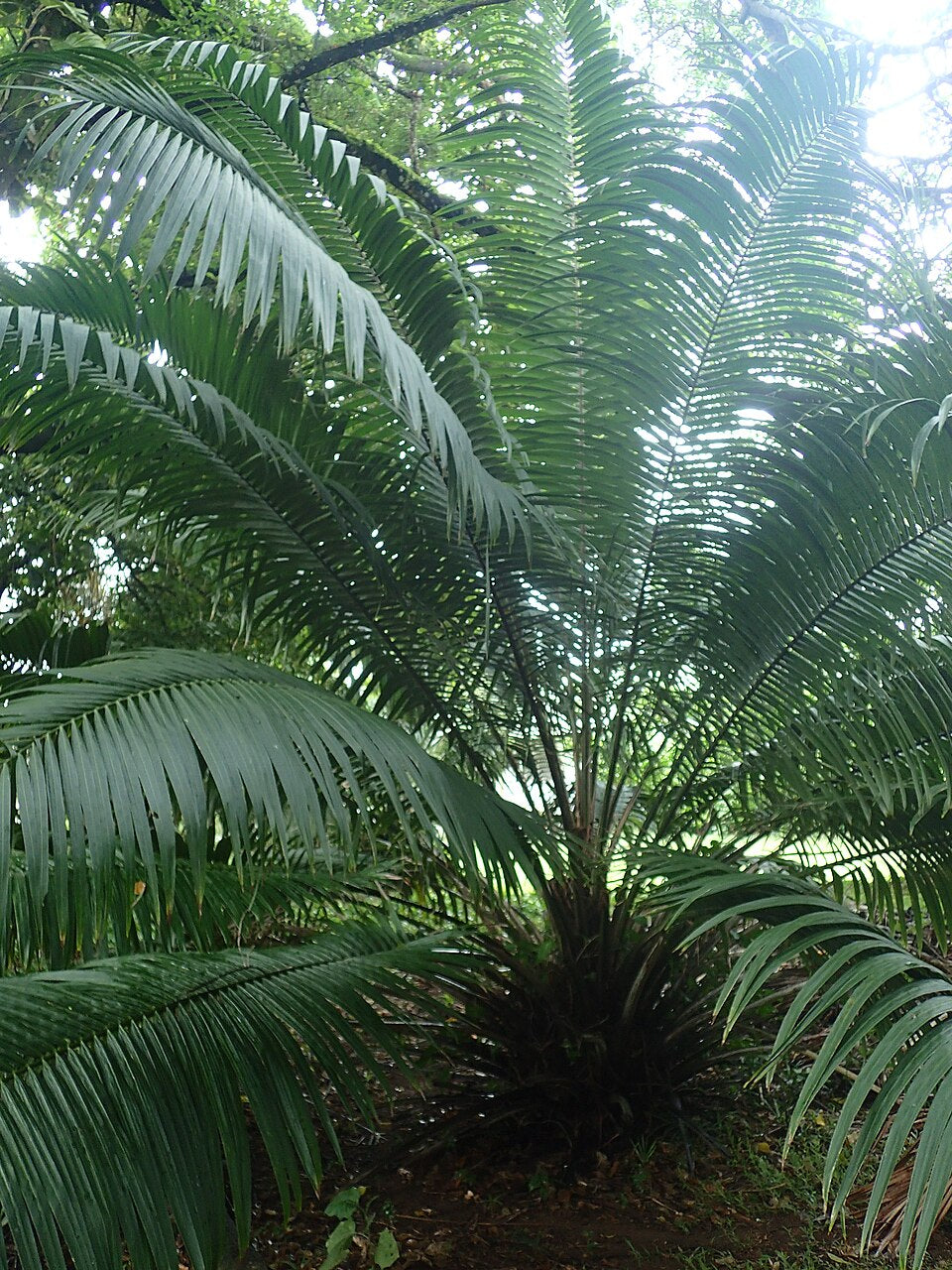
Traditional batana oil is made from the kernel of the American oil palm, Elaeis oleifera, cooked over a fire until the oil is extracted, where it "cools into a thick paste"11. WebMD describes it as "a soft solid that melts in your hands"12. Like African palm kernel oil, oil-palm kernel fats have "sharp melting properties, meaning hardness at room temperature combined with a low melting point"5, melting around 23 to 30 °C (73 to 86 °F)4.
That solid-to-liquid behavior matters on hair. In a 2009 study of five plant oils and three raw plant butters on human hair tresses, liquid oils cut wet combing force by about 60 percent, reduced split ends and added shine, while raw butters actually increased combing force because "butters in raw state are not as fluid as oils and do not spread easily along hair tresses"1. One of the tested butters was tucumã, a lauric and myristic palm kernel fat closely related in texture to batana. Rubbing a small amount between your palms until it turns fully liquid gives you a thin, even film instead of heavy clumps.
How much to use by hair type
Because unrefined batana is 100 percent fat with no water or silicones, a little goes far. Start smaller than you expect; you can always add a drop more on the next wash day, while using too much is the main reason people struggle to rinse it out.
| Hair type or goal | Starting amount | Where to apply | How often |
|---|---|---|---|
| Edges or fragile hairline | Pea-sized amount | Along the hairline, kept off the forehead skin | 1 to 2 times a week before washing |
| Fine or low-density hair | Pea-sized amount or a thin trace | Mid-lengths and ends only (skip the roots) | Once a week before washing |
| Medium, wavy or curly hair | Half a teaspoon (grape-sized) | Dry lengths, ends, and lightly on the scalp if not dandruff-prone | 1 to 2 times a week before washing |
| Coarse, thick or 4C coily hair | Up to one teaspoon (walnut-sized) | Section by section on dry lengths and ends, or a tiny trace to seal damp ends | 1 to 2 times a week |
Step-by-step pre-wash routine
Studies of other hair oils point to pre-wash application as the cleanest way to use a heavy natural fat. In a classic laboratory study, coconut oil applied before washing was the only tested oil that significantly reduced protein loss in both undamaged and damaged hair, while cutting water swelling by 44 percent2. Later work showed that the surface oil film slows moisture moving in and out of the hair fiber13,14.
- Start on dry hair. Water and oil repel each other; working melted oil onto dry strands helps it spread evenly along the cuticle.
- Melt between your palms. Scoop your starting amount with a clean, dry finger or spoon and rub your palms together for 5 to 10 seconds until the paste turns into clear amber oil. Do not heat the jar on a stove or in a microwave: the American Academy of Dermatology advises people with fragile or thinning hair to "forgo hot-oil treatments," because "these heat up the hair, which further damages fragile hair"3.
- Coat lengths and ends first. Smooth the oil through the dry mid-lengths and ends where friction and split ends happen most. If you oil your scalp, use only what remains on your fingertips and massage gently rather than scraping with nails.
- Wait 30 minutes to overnight. Cover with a bonnet or an old towel so the dark oil does not mark pillowcases or fabric.
- Shampoo thoroughly and condition as normal. Detangle gently while the hair has slip from conditioner; wet hair breaks easily when tugged.
30 minutes vs overnight
No study has tested how long batana oil needs to sit on hair, or whether it penetrates inside the hair fiber the way coconut oil can15,16. What we do know from other oils is that much of the combing and moisture-barrier effect comes from the surface film itself13,14, which forms as soon as the melted oil coats the strand. Thirty to sixty minutes before a wash is enough for most people, especially if you have fine hair or a sensitive scalp. Leaving it overnight under a bonnet is mostly a convenience choice for very coarse, dry or coily hair, and should be skipped if you get hairline breakouts or scalp flaking.
How to wash batana oil out without residue
Heavy residue is the most common complaint about pure batana oil, and it happens almost every time someone applies handfuls of butter or tries to rinse with water first.
- Shampoo dry before adding water: apply a normal amount of shampoo straight onto the oiled hair, massage it into the oil so the cleansers bind to the fat, then add warm water to lather and rinse.
- Do a second wash: the first wash lifts the bulk of the oil; the second wash leaves hair clean, soft and free of heaviness. Cosmopolitan notes that batana's roasted, smoky smell "tends to go away once you rub it in and doesn't linger"17, and a clean two-step wash removes any remaining scent.
- Wash regularly: the American Academy of Dermatology advises washing at least "once a week or every other week" so hair products do not build up, "which can be drying to the hair"6.
- Adjust next time: if your hair still feels coated after two shampoos, cut the amount in half on your next wash day.
How long does batana oil last (in use and on the shelf)?
People ask "how long does batana oil last" in two different ways: how many weeks one jar lasts in a routine, and how long it keeps on a shelf before going bad.
How long one jar lasts in use
A standard 4.1 oz (120 ml) jar holds roughly 24 teaspoons of oil. At half a teaspoon to one teaspoon used once or twice a week, one jar lasts most people about 6 to 8 weeks. Used only on edges or as a tiny trace on dry ends, a single jar can last 3 months or longer. Because hair grows on average about 1 centimeter (roughly half an inch) a month18, people who use oils to reduce breakage and keep more length usually judge their routine over 8 to 12 weeks rather than a single wash19.
Shelf life and storage
No published stability study sets an exact shelf life for traditional fire-cooked batana oil. What edible-oil chemistry tells us is clear: oils degrade during storage through autoxidation and light-driven photooxidation, and the rate depends on temperature, light, oxygen exposure, processing and fatty acid composition7. Oils high in saturated lauric and myristic fatty acids oxidize more slowly than polyunsaturated oils, while heat-roasted kernel oils can start with more thermally oxidized compounds20,7.
To keep any jar of unrefined batana fresh as long as possible:
- Keep the lid tightly sealed after every scoop to limit oxygen.
- Store in a cool, dark cupboard rather than a sunny windowsill or steaming shower ledge. Amber glass helps block light.
- Use clean, dry hands or a dry spatula so you do not introduce water into the jar.
- Expect seasonal texture shifts: kernel fats soften or melt above about 23 to 30 °C (73 to 86 °F)4 and firm back up when cool. Melting in summer heat does not mean the jar spoiled; if you want it firmer, place the closed jar in the refrigerator for a few hours without freezing it.
- Check the smell: real unrefined batana smells roasted, earthy and smoky17,21. A sharp, sour, waxy or paint-like odor is the usual sign that an oil has oxidized and should be discarded.
For our own Ancestica 100% Pure Unrefined Batana Oil, each 120 ml amber glass jar carries a single ingredient originating in Honduras (backed by a chamber of commerce certificate of origin; jars are filled at our packing facility outside Honduras). You can read how to check any jar for authenticity in How to tell real batana oil from a blend.
Scalp, dandruff, breakouts and light hair
- Patch test every new oil: the American Academy of Dermatology recommends applying a new product to a quarter-sized spot on the underside of your arm or inside of your elbow twice daily for 7 to 10 days before full use8.
- Dandruff or seborrheic dermatitis: the scalp yeasts behind dandruff (Malassezia) feed on lipids and release irritating free fatty acids such as oleic acid9,22,10. If your scalp flakes or itches from dandruff, check with a dermatologist before applying any oil to your scalp, and stick to mid-lengths and ends.
- Acne-prone skin along the hairline: hair oils and pomades are linked with forehead and hairline breakouts23,24, and lauric and myristic acids score high on rabbit-ear comedogenicity testing (though finished products vary on human skin)23,25. Keep heavy oils off your forehead and wash your pillowcase regularly.
- Very light, gray or bleached hair: nobody has tested whether dark, unrefined batana tints porous light hair. Try a small strand test in a hidden section before coating your whole head.
Questions people ask
Can I leave batana oil in my hair without washing it out?
For coarse or coily hair, a tiny trace melted between your palms can be smoothed onto dry ends to cut friction. Using a full scoop as a leave-in usually leaves hair greasy and traps dust; for full-head use, a pre-wash treatment rinsed out with shampoo works much better.
Should I apply batana oil to wet or dry hair?
Dry hair for a pre-wash treatment so the melted oil spreads evenly instead of sliding off water. If you use a tiny trace on the ends after washing, damp hair works well because the surface oil film helps slow moisture escaping as your hair dries13,14.
How often should I use batana oil?
Once or twice a week as a pre-wash treatment is plenty for most hair types. Daily heavy oiling is unnecessary and raises the risk of buildup and hairline breakouts.
My batana oil melted in shipping. Is it still good?
Yes. Lauric palm kernel fats melt around 23 to 30 °C (73 to 86 °F)4, so warm weather or a delivery truck naturally softens them. Set the closed jar in a cool room or in the refrigerator for a few hours and it will return to a soft solid. See our full batana oil evidence review for the chemistry behind it.
References
- Fregonesi A, Scanavez C, Santos L, et al. Brazilian oils and butters: the effect of different fatty acid chain composition on human hair physiochemical properties. Journal of Cosmetic Science. 2009;60(2):273-280. Full text: Society of Cosmetic Chemists library (PDF). PubMed
- Rele AS, Mohile RB. Effect of mineral oil, sunflower oil, and coconut oil on prevention of hair damage. Journal of Cosmetic Science. 2003;54(2):175-192. Full text: Society of Cosmetic Chemists library (PDF). PubMed
- American Academy of Dermatology Association. Hair loss: tips for managing. Accessed November 7, 2026. aad.org
- Hardon JJ, Rajanaidu N, van der Vossen HAM. Elaeis guineensis Jacq. In: van der Vossen HAM, Umali BE, eds. Plant Resources of South-East Asia No. 14: Vegetable Oils and Fats. Leiden: Backhuys; 2001. PROSEA
- Pantzaris TP, Mohd Jaaffar Ahmad. Palm Kernel Oil: Origin, Commerce, Properties and Uses. Palm Oil Research Institute of Malaysia (PORIM Europe), hosted by FOSFA. FOSFA (PDF)
- American Academy of Dermatology Association. Black hair: tips for everyday care. Accessed November 7, 2026. aad.org
- Choe E, Min DB. Mechanisms and factors for edible oil oxidation. Comprehensive Reviews in Food Science and Food Safety. 2006;5(4):169-186. doi:10.1111/j.1541-4337.2006.00009.x. Abstract only. doi.org
- American Academy of Dermatology Association. How to test skin care products. Last updated August 10, 2021. Accessed November 7, 2026. aad.org
- Ro BI, Dawson TL. The role of sebaceous gland activity and scalp microfloral metabolism in the etiology of seborrheic dermatitis and dandruff. Journal of Investigative Dermatology Symposium Proceedings. 2005;10(3):194-197. doi:10.1111/j.1087-0024.2005.10104.x. PubMed (abstract)
- Borda LJ, Wikramanayake TC. Seborrheic dermatitis and dandruff: a comprehensive review. Journal of Clinical and Investigative Dermatology. 2015;3(2). doi:10.13188/2373-1044.1000019. PubMed Central (full text)
- Munguía O (Director, MOPAWI), Collins J. Ojon oil. Footsteps 65. Tearfund; 2005. learn.tearfund.org
- Gascón A. Batana oil for hair growth: what to know. WebMD. Medically reviewed by Stephanie S. Gardner, MD. September 14, 2025. webmd.com
- Keis K, Persaud D, Kamath YK, Rele AS. Investigation of penetration abilities of various oils into human hair fibers. Journal of Cosmetic Science. 2005;56(5):283-295. Full text: Society of Cosmetic Chemists library (PDF). PubMed
- Keis K, Huemmer CL, Kamath YK. Effect of oil films on moisture vapor absorption on human hair. Journal of Cosmetic Science. 2007;58(2):135-145. PubMed (abstract)
- Ruetsch SB, Kamath YK, Rele AS, Mohile RB. Secondary ion mass spectrometric investigation of penetration of coconut and mineral oils into human hair fibers: relevance to hair damage. Journal of Cosmetic Science. 2001;52(3):169-184. PubMed (abstract)
- Gode V, Bhalla N, Shirhatti V, Mhaskar S, Kamath Y. Quantitative measurement of the penetration of coconut oil into human hair using radiolabeled coconut oil. Journal of Cosmetic Science. 2012;63(1):27-31. Full text: Society of Cosmetic Chemists library (PDF). PubMed
- Gillette B. Batana oil is popping off on TikTok. Cosmopolitan (via AOL). August 20, 2024. Quotes dermatologist Omer Ibrahim, MD. aol.com
- Hoover E, Alhajj M, Flores JL. Physiology, hair. In: StatPearls. Treasure Island (FL): StatPearls Publishing; updated July 30, 2023. NCBI Bookshelf NBK499948. NCBI Bookshelf
- Khumalo NP, Gumedze F. African hair length in a school population: a clue to disease pathogenesis?. Journal of Cosmetic Dermatology. 2007;6(3):144-151. doi:10.1111/j.1473-2165.2007.00326.x. PubMed (abstract)
- Yahaya ZS, Awwalu S, Builders PF, et al. Effects of kernel roasting on the physicochemical, compositional, thermal, and spectrometric profiles of palm kernel oil. Discover Chemistry. 2026;3:112. doi:10.1007/s44371-026-00578-9. doi.org
- Beck L. Experts reveal the truth about batana oil and its effects on hair growth. Parade (via AOL). September 6, 2026. Quotes dermatologist Brendan Camp, MD, and trichologists Kerry Yates, Tina Mui and Emily DeNard. aol.com
- DeAngelis YM, Gemmer CM, Kaczvinsky JR, et al. Three etiologic facets of dandruff and seborrheic dermatitis: Malassezia fungi, sebaceous lipids, and individual sensitivity. Journal of Investigative Dermatology Symposium Proceedings. 2005;10(3):295-297. doi:10.1111/j.1087-0024.2005.10119.x. PubMed (abstract)
- Fulton JE Jr. Comedogenicity and irritancy of commonly used ingredients in skin care products. Journal of the Society of Cosmetic Chemists. 1989;40(6):321-333. Society of Cosmetic Chemists library (PDF)
- Kassa Z, Seid AS, Bitew BD, Tekletsadik EA. Prevalence and associated factors of acne among patients attending dermatovenereology outpatient department at the University of Gondar Comprehensive Specialized Hospital, Northwest Ethiopia, 2023. Scientific Reports. 2025;15:33046. doi:10.1038/s41598-025-08889-0. PubMed Central (full text)
- Draelos ZD, DiNardo JC. A re-evaluation of the comedogenicity concept. Journal of the American Academy of Dermatology. 2006;54(3):507-512. doi:10.1016/j.jaad.2005.11.1058. PubMed (abstract)
About the authors. Ancestica is a small, independent brand that makes one-ingredient Honduran batana oil and sulfate-free solid shampoo and conditioner bar sets. We write the Journal from published sources: every factual claim above links to the study, report or article it comes from, so you can check it yourself.
Disclosure. Ancestica sells cosmetic hair care products, so we have an interest in these subjects. We report the evidence as it stands, including where it is thin or pre-clinical. This article is for general information about cosmetic products and is not medical advice.