
Guide
Solid shampoo and conditioner bars: syndet vs soap chemistry, waxy residue, and how to use them
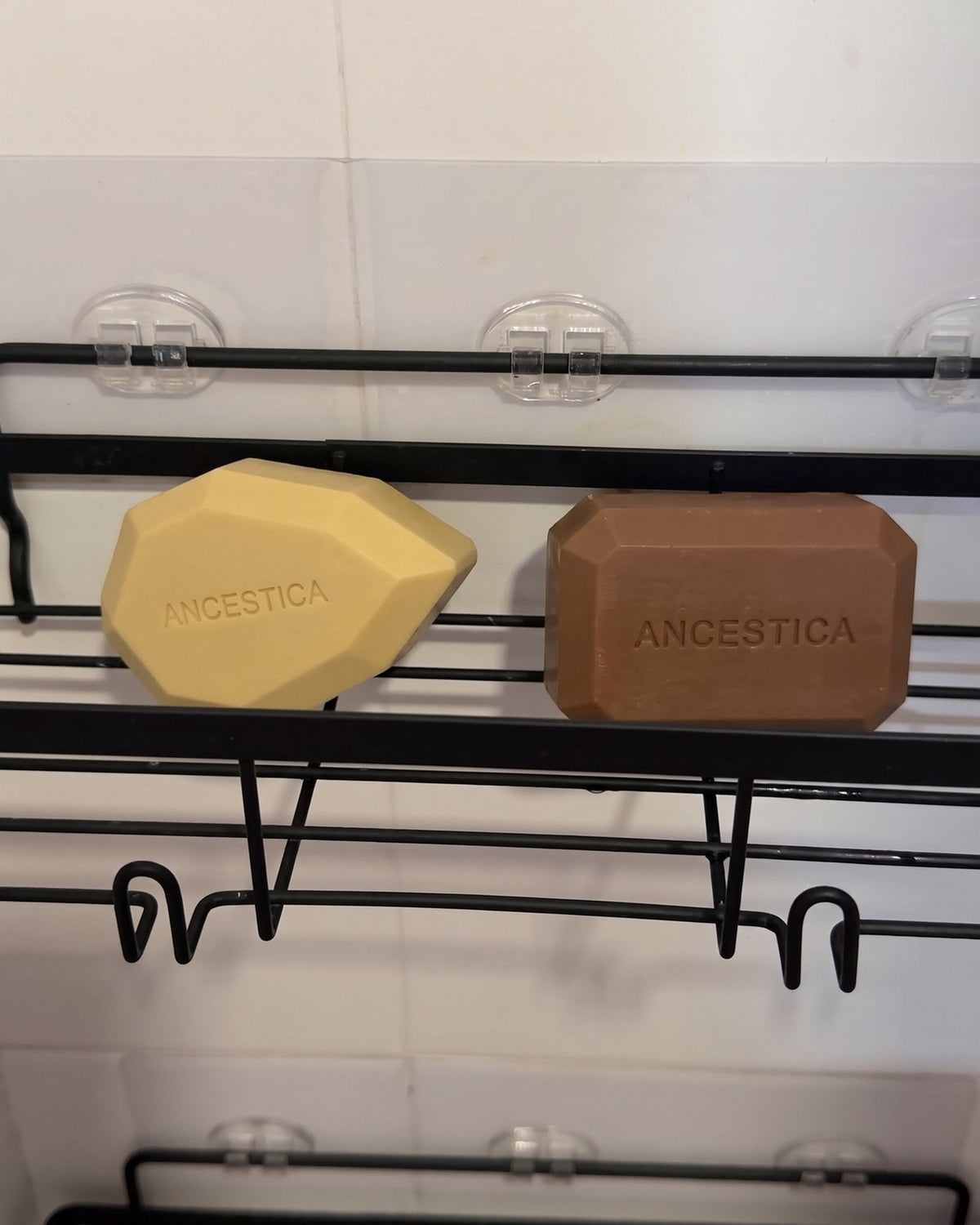
People who try a shampoo bar once and go back to bottled shampoo usually report one of two problems: either their hair felt stiff, waxy and tangled as soon as it dried, or the bar turned soft in the shower dish and disappeared in two weeks. Neither problem is inherent to taking the water out of hair care. The first is a surfactant and pH problem; the second is a storage and binder problem. Here is what cosmetic chemistry research shows about solid shampoo and conditioner bars, with every factual claim sourced.
In brief
- Soap bars and syndet shampoo bars are two different products: traditional saponified soap bars are alkaline (typically pH 9 to 10), which increases negative electrical charge and friction between hair cuticles1 and reacts with hard-water minerals to leave insoluble film. Modern syndet shampoo bars use mild coconut-derived cleansers such as Sodium Cocoyl Isethionate formulated closer to the acidic pH of scalp and hair1,2.
- Why two separate bars beat a 2-in-1 bar: anionic cleansers lift sebum and styling buildup from the scalp, while cationic conditioning agents (such as Behentrimonium Methosulfate) and fatty alcohols bind to damaged hair shafts to lower combing friction and static2. Separating scalp cleansing from length conditioning lets each bar do its job without weighing down roots.
- Technique matters on fragile and textured hair: detangle gently before washing, glide the bar in one direction rather than rubbing hair in circles on top of your head, and apply conditioner along the lengths and ends3,4.
- Storage determines how long a bar lasts: because solid bars contain no water, keeping them on a slotted draining dish away from direct shower spray prevents glycerin and plant butters from absorbing standing water.
- Check allergens on the box: coconut-derived surfactants (`Sodium Cocoyl Isethionate`, `Cocamidopropyl Betaine`) and added fragrance (`Parfum`) are standard cosmetic disclosures worth checking if you have contact allergies5,6,7.
Syndet bars vs lye soap bars: why waxy residue happens
Not every solid bar sold for hair is a shampoo. Many artisanal bars are true soaps made by saponifying plant oils (olive, coconut, castor or shea) with sodium hydroxide (lye). On skin, traditional soap rinses reasonably well in soft water. On hair, two chemical properties work against it:
- Alkaline pH and cuticle friction: human hair shaft surface pH is naturally acidic (around pH 3.67), and the scalp sits around pH 5.51. In a review of 123 commercial shampoos published in the International Journal of Trichology, dermatologists noted that alkaline cleansing raises the negative electrical charge on the hair fiber surface, increasing friction between cuticle scales, frizz, static electricity and fiber breakage1.
- Hard-water soap film: carboxylate salts in true lye soap react with calcium and magnesium ions in tap water to form insoluble fatty-acid salts (the same chalky ring left on a porcelain tub). Trying to cut that film with an apple cider vinegar rinse every wash day only treats a problem the cleanser created.
| Property | Saponified soap bar | Syndet solid shampoo bar | Liquid sulfate-free shampoo |
|---|---|---|---|
| Primary cleanser | Sodium salts of fatty acids (oils + lye) | Mild synthetic detergents (such as Sodium Cocoyl Isethionate + Cocamidopropyl Betaine)2 | Mild synthetic detergents dissolved in 70% to 80% water2 |
| Typical pH behavior | Alkaline (pH 8.5 to 10+); increases cuticle friction1 | Formulated in a skin- and hair-compatible pH range1 | Formulated in a skin- and hair-compatible pH range1 |
| Hard-water rinse | Forms waxy calcium/magnesium scum | Rinses clean in hard or soft water2 | Rinses clean in hard or soft water |
| Water & packaging | Waterless, paper carton | Waterless, concentrated active bar, paper carton | Mostly water, plastic bottle and pump |
A syndet (synthetic detergent) shampoo bar replaces saponified lye soap with mild, solid-form surfactants pressed together with starches, humectants and plant emollients. In dermatology literature, isethionates (such as Sodium Cocoyl Isethionate, derived from coconut fatty acids) and amphoteric co-surfactants (such as Cocamidopropyl Betaine and Sodium Cocoamphoacetate) are classed among gentle cleansers suitable for damaged, dry or chemically treated hair because they remove sebum without harsh lipid stripping and rinse cleanly in hard water2.
How a solid conditioner bar works without water
Liquid hair conditioner is typically an emulsion of 80 percent or more water holding a small percentage of conditioning lipids and cationic surfactants. Taking the water out leaves the functional ingredients themselves pressed into a firm bar:
- Cationic conditioning agents (Behentrimonium Methosulfate): despite the word "methosulfate" in its chemical name, behentrimonium methosulfate is not a cleansing sulfate like SLS. It is a positively charged quaternary ammonium conditioning compound derived from rapeseed oil. Washed or weathered hair carries a net negative surface charge; cationic conditioners adsorb electrostatically onto damaged cuticle sites, neutralizing static and lowering wet and dry combing force2.
- Fatty alcohols (Cetearyl Alcohol, Cetyl Alcohol): unlike volatile drying alcohols (ethanol or isopropyl alcohol), long-chain fatty alcohols are waxy, non-irritating lipids that form a smooth lamellar slip layer along the hair shaft2.
- Plant butters and liquid wax esters (shea butter, jojoba oil): jojoba oil is rich in liquid wax esters rather than heavy triglycerides; in controlled laboratory testing on chemically straightened Afro-ethnic hair tresses, jojoba oil ranked among the top conditioning agents for protecting the fiber and limiting protein loss8.
Because a conditioner bar has no water diluting it, it does not burst into foam like a shampoo bar. Instead, warm shower water releases a thin, silky slip layer as you glide the bar down wet mid-lengths and ends.
How to wash with solid bars step by step
Wet hair stretches more easily than dry hair and is more vulnerable to mechanical snapping when rubbed roughly2,4. Good bar technique keeps friction low:
- Detangle gently before stepping into the shower (or detangle in sections with conditioner slip on tightly coiled hair, per American Academy of Dermatology guidance for Black hair care3).
- Soak your hair thoroughly first. A waterless shampoo bar needs plenty of water on the hair to dissolve its surfactant surface into foam.
- Glide the shampoo bar over the scalp four or five times in the direction of hair growth (or lather between wet palms and press into the roots), set the bar down, and massage the scalp with your fingertips for a minute. Avoid piling long hair onto the crown and scrubbing in circles, which tangles cuticles.
- Rinse thoroughly with warm water.
- Glide the rectangular conditioner bar down wet mid-lengths and ends only, keeping heavy conditioning lipids off the scalp if your roots get flat easily. Smooth through with fingers, leave for 2 to 3 minutes (up to 5 minutes on very dry ends), and rinse cool.
- Store both bars dry. Place each bar on a slotted draining dish outside the shower spray. Glycerin attracts moisture from standing water; letting a bar dry firm between washes keeps it from softening prematurely.
What changes in the first week
If you switch from a conventional bottled shampoo or conditioner rich in non-water-soluble silicones (such as dimethicone), the first two or three washes with a silicone-free, sulfate-free bar can feel unfamiliar. Mild isethionate and betaine surfactants remove surface buildup gradually rather than stripping everything in one harsh wash2. If the very first lather feels light, rinse and lather a second time with a small pass of the shampoo bar; once old coating rinses clear over the first week, foam builds much faster.
Curly, coily, fine and color-treated hair
- Curly and coily hair (types 3A to 4C): curved hair fibers have natural structural weak points at each bend where cuticles lift and fractures start under combing tension9,4. Sulfate-free syndet cleansing paired with high-slip fatty-alcohol and jojoba conditioning helps keep combing resistance low without drying out coils2,8,3. Work in sections when applying the conditioner bar.
- Fine or oily-root hair: 2-in-1 conditioning shampoos often leave fine roots limp. Using a dedicated scalp shampoo bar at the roots and keeping the solid conditioner bar strictly from ear-level down gives clean root lift with detangled ends.
- Color-treated or bleached hair: bleached and dyed hair has higher negative surface charge and porosity, making high-pH soaps especially rough on color-treated strands1. Sulfate-free, pH-compatible syndet bars clean gently without alkaline cuticle swelling1,2.
Reading a solid bar ingredient label
Even gentle, plant-derived bars contain ingredients that sensitive scalps should check before buying:
- Coconut-derived surfactants: Sodium Cocoyl Isethionate, Cocamidopropyl Betaine and Sodium Cocoamphoacetate are manufactured from coconut fatty acids. Clinical patch-test studies note that contact allergy to cocamidopropyl betaine (often linked to manufacturing trace amidoamines) is distinct from food tree-nut allergy, though anyone with a diagnosed coconut or surfactant allergy should check the full INCI list with their allergist5,10.
- Fragrance (Parfum): fragrances are among the most common cosmetic contact allergens6. If you have reactive skin or scalp eczema, patch test on the inner arm for 7 to 10 days before full scalp use7.
How our own two bar sets are built
At Ancestica, our Solid Shampoo & Conditioner Bar Set pairs a full-size 100 g (3.53 oz) leaf-shaped syndet shampoo bar with a full-size 90 g (3.17 oz) rectangular conditioner bar (190 g / 6.7 oz total per set, $34.99 one-time or $17.50 per bar, $27.99 on monthly Subscribe & save, 2 Sets $54.99, 3 Sets $69.98). Neither bar formula contains batana oil, sulfates, silicones or parabens, and both formulas contain fragrance and suit every hair type and color:
- Caffeine & Curcuma (scalp formula): formulated with caffeine, curcuma (turmeric) root extract, panthenol, hydrolyzed rice protein, shea butter and jojoba seed oil, with a warm coffee scent.
- Rice Protein & Vanilla (lengths formula): formulated with hydrolyzed rice protein, rice extract, panthenol, shea butter, jojoba seed oil and vitamin E, with a soft vanilla scent.
Every ingredient from the back of all four boxes is published verbatim on our Ingredients, sourcing & product specifications page, and the peer-reviewed studies on those individual ingredients are reviewed in our companion article, Caffeine, turmeric, panthenol and rice water in shampoo bars: what hair studies actually show.
Questions people ask
Why did another shampoo bar leave my hair feeling waxy?
Most waxy buildup comes from saponified lye soap bars, whose alkaline pH roughens the cuticle1 and whose fatty-acid salts react with hard-water minerals. A pH-balanced syndet shampoo bar made with Sodium Cocoyl Isethionate does not form soap scum in hard water2.
How do you tell the shampoo bar from the conditioner bar in the shower?
In our sets, the shampoo bar (100 g) is molded into a botanical leaf shape so you can tell it by touch with your eyes closed, while the conditioner bar (90 g) is a smooth rectangle stamped ANCESTICA.
Do Ancestica shampoo and conditioner bars contain batana oil?
No. Our 100% Pure Unrefined Batana Oil is a single-ingredient pre-wash hair oil sold in amber glass jars; our solid shampoo and conditioner bars are separate waterless wash-day formulas built around syndet cleansers, panthenol, rice protein, caffeine, curcuma, shea butter and jojoba oil.
Are solid shampoo bars safe for color-treated hair?
Syndet bars formulated without harsh lauryl sulfates or alkaline lye clean without the high-pH fiber swelling that accelerates cuticle wear on dyed or bleached hair1,2.
References
- Gavazzoni Dias MF, de Almeida AM, Cecato PM, Adriano AR, Pichler J. The shampoo pH can affect the hair: myth or reality? International Journal of Trichology. 2014;6(3):95-99. doi:10.4103/0974-7753.139078. PubMed Central (full text)
- Gavazzoni Dias MF. Hair cosmetics: an overview. International Journal of Trichology. 2015;7(1):2-15. doi:10.4103/0974-7753.153450. PubMed Central (full text)
- American Academy of Dermatology Association. Black hair: tips for everyday care. Accessed November 7, 2026. aad.org
- Khumalo NP, Gumedze F. African hair length in a school population: a clue to disease pathogenesis?. Journal of Cosmetic Dermatology. 2007;6(3):144-151. doi:10.1111/j.1473-2165.2007.00326.x. PubMed (abstract)
- Shaffer KK, Jaimes JP, Hordinsky MK, et al. Allergenicity and cross-reactivity of coconut oil derivatives: a double-blind randomized controlled pilot study. Dermatitis. 2006;17(2):71-76. PubMed (abstract)
- US Food and Drug Administration. Allergens in cosmetics. Accessed November 7, 2026. fda.gov
- American Academy of Dermatology Association. How to test skin care products. Last updated August 10, 2021. Accessed November 7, 2026. aad.org
- Dias TC, Baby AR, Kaneko TM, Velasco MV. Protective effect of conditioning agents on Afro-ethnic hair chemically treated with thioglycolate-based straightening emulsion. Journal of Cosmetic Dermatology. 2008;7(2):120-126. doi:10.1111/j.1473-2165.2008.00374.x. PubMed (abstract)
- Khumalo NP, Doe PT, Dawber RP, Ferguson DJ. What is normal black African hair? A light and scanning electron-microscopic study. Journal of the American Academy of Dermatology. 2000;43(5 Pt 1):814-820. doi:10.1067/mjd.2000.107958. PubMed (abstract)
- Polk BI, Dinakarpandian D, Nanda M, et al. Association of tree nut and coconut sensitizations. Annals of Allergy, Asthma & Immunology. 2016;117(4):412-416. doi:10.1016/j.anai.2016.07.023. PubMed (abstract)
About the authors. Ancestica is a small, independent brand that makes one-ingredient Honduran batana oil and sulfate-free solid shampoo and conditioner bar sets. We write the Journal from published sources: every factual claim above links to the study, report or article it comes from, so you can check it yourself.
Disclosure. Ancestica sells cosmetic hair care products, so we have an interest in these subjects. We report the evidence as it stands, including where it is thin or pre-clinical. This article is for general information about cosmetic products and is not medical advice.