
Evidence review
Batana oil vs rosemary oil for hair: what the research actually shows
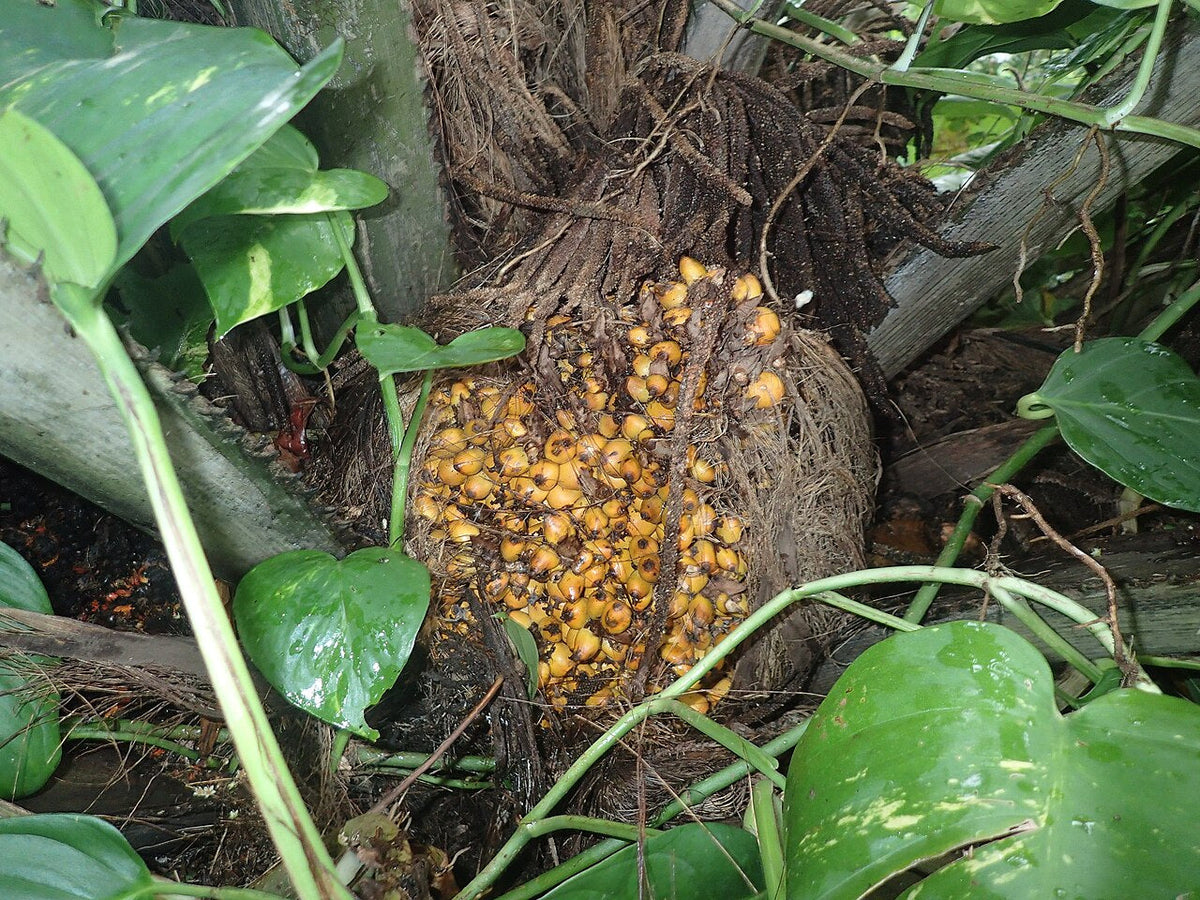
Batana oil and rosemary oil are often compared on social media as if they were two flavors of the same hair treatment. Chemically, they are not even in the same category. Batana is a solid fixed fat cooked from the kernel of the American oil palm (Elaeis oleifera)1; rosemary oil is a volatile essential oil steam-distilled from the leaves of an herb (Salvia rosmarinus, formerly Rosmarinus officinalis) that has to be diluted before touching skin. One is used as a conditioning butter for dry, fragile hair strands; the other is studied as a topical scalp active. Here is what the published research actually shows for both, with every claim sourced.
In brief
- Different chemistry, different jobs: batana is a triglyceride kernel fat that coats and lubricates dry hair strands2,1; rosemary oil is a concentrated essential oil used in drops diluted in a carrier oil or lotion on the scalp.
- Clinical evidence on batana oil: zero published human or laboratory studies have tested batana oil on hair or scalp3,4,5. What supports using a plant oil on dry hair comes from studies of other oils cutting wet combing friction and breakage6,7.
- Clinical evidence on rosemary oil: one randomized trial (100 adults, 6 months) compared rosemary oil lotion to 2 percent minoxidil and reported similar hair-count increases at 6 months with less scalp itching in the rosemary group8. Dermatology reviews note it is the only randomized trial of rosemary oil alone for pattern hair loss, had no placebo control arm, and used 2 percent rather than 5 percent minoxidil9.
- Safety differences: undiluted essential oils are a frequent cause of allergic contact dermatitis and must be diluted and patch tested10,11; heavy kernel fats like batana can weigh down fine hair, clog pores along the hairline, or irritate dandruff-prone scalps12,13.
- Medical hair loss: neither oil replaces an evaluation by a dermatologist for sudden, patchy or progressive hair loss.
Side-by-side comparison
| Feature | Unrefined batana oil | Rosemary essential oil |
|---|---|---|
| Plant source | Kernel of the American oil palm (Elaeis oleifera), traditionally made in La Mosquitia, Honduras1 | Leaves of the rosemary shrub (Rosmarinus officinalis / Salvia rosmarinus)8 |
| Type of oil | Fixed triglyceride butter (solid when cool, melts in hands)14,15 | Volatile essential oil (concentrated aromatic liquid, requires dilution) |
| Main documented job | Conditioning dry, coarse or breakage-prone strands (inferred from other plant-oil studies)6,7 | Topical scalp lotion studied in one comparative trial8 |
| Human trials on hair | None published3,4 | 1 randomized comparative trial on rosemary oil alone (n = 100, 6 months)8,9; 1 multi-oil aromatherapy trial (n = 86)16 |
| Main drawbacks | Heavy on fine hair, smoky roasted scent, needs thorough shampooing, not ideal on dandruff-prone scalps3,13 | Can trigger scalp itching or allergic contact dermatitis if poorly diluted; limited replication of clinical data8,10 |
| Typical routine | Pre-wash butter melted in palms, 1 to 2 times per week | Diluted in a carrier oil or formulated lotion applied to the scalp |
What research shows for batana oil
As we detail in our batana oil evidence review, no peer-reviewed study has ever tested batana oil on human hair or scalp. Dermatologists and trichologists quoted in mainstream outlets say the same: "There are currently no studies on batana oil for hair health or hair growth"3, and Healthline opens its review with "There's no evidence that batana oil can help with hair loss"5.
What does have laboratory support is the cosmetic role of plant oils on dry, fragile hair strands. In controlled tress tests of other vegetable oils, oil application cut wet combing force by roughly 60 percent, reduced split ends and increased shine6, while coconut oil applied before washing reduced protein loss in both undamaged and damaged hair7 and slowed moisture movement across the strand17,18. Scalp hair grows about 1 centimeter a month on average19; in tightly coiled or fragile hair where mechanical breakage cancels out new length, reducing breakage helps more length stay on the head20. That is a conditioning and length-retention mechanism, not a follicle drug effect.
What research shows for rosemary oil
Rosemary oil has a small body of published research, far more than batana oil, though much thinner than social-media clips imply. Three papers carry almost the entire reputation:
- The 2015 human trial (Panahi et al.): 100 adults with pattern hair loss were randomly assigned to apply either rosemary oil lotion (3.7 mg/mL) or 2 percent minoxidil twice daily for 6 months8,21. Neither group changed significantly at 3 months; at 6 months, both groups showed a statistically significant rise in mean hair count from baseline, with no significant difference between the two groups8. Scalp itching increased in both groups, more frequently with minoxidil8.
- What dermatology reviews point out about that trial: a 2024 systematic review in Skin Appendage Disorders confirmed that Panahi 2015 remains the single randomized trial of rosemary oil alone for pattern hair loss, even as online search interest in rosemary oil surged more than 550 percent between 2020 and 20249. The review's data table also shows modest absolute changes (mean count rising from 122.8 to 129.6 in the rosemary group and 138.4 to 140.7 in the 2 percent minoxidil group, with uneven starting baselines)9. Crucially, the study had no placebo control arm, compared against 2 percent minoxidil rather than the standard 5 percent strength often used for men, and has not yet been independently replicated in a larger placebo-controlled trial.
- Animal and multi-oil studies: a 2013 mouse study tested a hydroalcoholic rosemary leaf extract (not the steam-distilled essential oil) at 2 mg per day and reported 5-alpha reductase inhibition in vitro22. An earlier 1998 randomized trial in 86 patients with alopecia areata tested a four-oil blend (thyme, rosemary, lavender and cedarwood) in jojoba and grapeseed carrier oils against carrier oils alone, with 44 percent showing photographic improvement versus 15 percent in the control group16. Because four essential oils were combined and alopecia areata is an autoimmune condition rather than common pattern thinning, that trial cannot isolate rosemary oil on its own.
In short: rosemary oil has preliminary human data that batana oil lacks, yet dermatologists still consider the evidence limited and in need of larger, placebo-controlled studies9,21.
Safety and scalp reactions
Both oils can cause trouble if used carelessly, for different reasons:
- Rosemary oil and contact allergy: essential oils are concentrated aromatic compounds, not bland fats. A dermatology review of essential-oil contact allergy found that nearly 80 essential oils have caused allergic contact dermatitis, with "most reactions caused by application of pure oils or high-concentration products"10. Even in the 2015 clinical trial using a diluted rosemary lotion, scalp itching increased significantly compared with baseline8. Never put neat rosemary essential oil straight onto your scalp.
- Batana oil and heavy-fat limits: unrefined batana is a single triglyceride fat with no added essential oils or fragrance, which avoids fragrance allergens, though no clinical allergy study has tested batana itself. Its main limits are physical and microbial: heavy kernel fats can flatten fine hair, contribute to forehead or hairline breakouts12,23, and potentially worsen flaking in people with dandruff or seborrheic dermatitis, where Malassezia scalp yeasts metabolize oils into irritating free fatty acids13,24.
- Patch test either way: before putting any new oil or diluted blend on your scalp, follow the American Academy of Dermatology's patch-test steps: apply to a quarter-sized spot on the inside of your arm twice daily for 7 to 10 days11.
Which fits your hair, and can you use both?
Because these two products do completely different jobs, choosing between them comes down to what your hair actually needs:
- Choose a conditioning butter like batana if your main issue is dry, coarse, curly, coily or heat-stressed hair that snaps during detangling and feels brittle at the ends. Used melted as a pre-wash conditioning treatment (see our step-by-step guide to using batana oil), a heavy unrefined fat coats fragile strands so they comb more easily and resist breakage.
- Consider a properly diluted rosemary lotion or talk to a dermatologist if your concern is gradual thinning at the crown or part rather than strand dryness. If hair loss is sudden, patchy or progressive, a board-certified dermatologist can diagnose the cause and discuss proven medical options rather than relying on cosmetic oils alone.
- Can you mix rosemary oil into batana oil? Some people add a drop or two of rosemary essential oil into a melted teaspoon of batana oil as the carrier fat before washing. If you do, keep the essential oil heavily diluted, patch test the exact blend first11,10, and wash it out cleanly afterward. For our own Ancestica 100% Pure Unrefined Batana Oil, we keep the jar strictly one ingredient (pure Honduran Elaeis oleifera oil, nothing added) so people with fragrance sensitivity can use it on its own.
Questions people ask
Is batana oil or rosemary oil better for dry, breaking hair?
Batana oil is a rich triglyceride fat meant to lubricate and soften dry, coarse hair strands. Pure rosemary essential oil does not condition or coat dry hair; it has to be mixed into a carrier oil or lotion anyway.
Which one has more clinical research?
Rosemary oil. It has one 6-month randomized comparative trial in 100 adults8 and a mouse extract study22, though reviewers note the lack of a placebo arm and limited replication9. Batana oil has zero published clinical trials on hair3,4.
Can I use batana oil as a carrier oil for rosemary essential oil?
Yes, once melted in your palms, batana oil is a fixed plant fat and can dilute essential oils for a pre-wash treatment. Keep the essential oil concentration low, patch test first for 7 to 10 days11, and avoid applying heavy oils to the scalp if you have dandruff or seborrheic dermatitis13.
How can I tell if my batana oil is actually real?
Look for a single ingredient with the botanical name (Elaeis oleifera), a solid texture that melts in warm hands, a roasted smoky aroma and origin documents. Read How to tell real batana oil from a blend for the full checklist.
References
- Munguía O (Director, MOPAWI), Collins J. Ojon oil. Footsteps 65. Tearfund; 2005. learn.tearfund.org
- Conzemius E. Ethnographical Survey of the Miskito and Sumu Indians of Honduras and Nicaragua. Smithsonian Institution, Bureau of American Ethnology, Bulletin 106. Washington: Government Printing Office; 1932. Pages 27, 96 and 171. hdl:10088/15412. Smithsonian Research Online (PDF)
- Gillette B. Batana oil is popping off on TikTok. Cosmopolitan (via AOL). August 20, 2024. Quotes dermatologist Omer Ibrahim, MD. aol.com
- Beck L. Experts reveal the truth about batana oil and its effects on hair growth. Parade (via AOL). September 6, 2026. Quotes dermatologist Brendan Camp, MD, and trichologists Kerry Yates, Tina Mui and Emily DeNard. aol.com
- Lovering C. Batana oil: can it help with hair loss? Healthline. Medically reviewed by Bukky Aremu, APRN. September 16, 2024. healthline.com
- Fregonesi A, Scanavez C, Santos L, et al. Brazilian oils and butters: the effect of different fatty acid chain composition on human hair physiochemical properties. Journal of Cosmetic Science. 2009;60(2):273-280. Full text: Society of Cosmetic Chemists library (PDF). PubMed
- Rele AS, Mohile RB. Effect of mineral oil, sunflower oil, and coconut oil on prevention of hair damage. Journal of Cosmetic Science. 2003;54(2):175-192. Full text: Society of Cosmetic Chemists library (PDF). PubMed
- Panahi Y, Taghizadeh M, Marzony ET, Sahebkar A. Rosemary oil vs minoxidil 2% for the treatment of androgenetic alopecia: a randomized comparative trial. Skinmed. 2015;13(1):15-21. Abstract only. PubMed (abstract)
- Gupta AK, Wang H, Wang T, Talukder M. Do non-prescription products help in managing androgenic alopecia? Skin Appendage Disorders. 2024;11(3):270-281. doi:10.1159/000542880. PubMed Central (full text)
- de Groot AC, Schmidt E. Essential oils, part IV: contact allergy. Dermatitis. 2016;27(4):170-175. doi:10.1097/DER.0000000000000197. Abstract only. PubMed (abstract)
- American Academy of Dermatology Association. How to test skin care products. Last updated August 10, 2021. Accessed November 7, 2026. aad.org
- Fulton JE Jr. Comedogenicity and irritancy of commonly used ingredients in skin care products. Journal of the Society of Cosmetic Chemists. 1989;40(6):321-333. Society of Cosmetic Chemists library (PDF)
- Ro BI, Dawson TL. The role of sebaceous gland activity and scalp microfloral metabolism in the etiology of seborrheic dermatitis and dandruff. Journal of Investigative Dermatology Symposium Proceedings. 2005;10(3):194-197. doi:10.1111/j.1087-0024.2005.10104.x. PubMed (abstract)
- Gascón A. Batana oil for hair growth: what to know. WebMD. Medically reviewed by Stephanie S. Gardner, MD. September 14, 2025. webmd.com
- Pantzaris TP, Mohd Jaaffar Ahmad. Palm Kernel Oil: Origin, Commerce, Properties and Uses. Palm Oil Research Institute of Malaysia (PORIM Europe), hosted by FOSFA. FOSFA (PDF)
- Hay IC, Jamieson M, Ormerod AD. Randomized trial of aromatherapy. Successful treatment for alopecia areata. Archives of Dermatology. 1998;134(11):1349-1352. Abstract only. PubMed (abstract)
- Keis K, Persaud D, Kamath YK, Rele AS. Investigation of penetration abilities of various oils into human hair fibers. Journal of Cosmetic Science. 2005;56(5):283-295. Full text: Society of Cosmetic Chemists library (PDF). PubMed
- Keis K, Huemmer CL, Kamath YK. Effect of oil films on moisture vapor absorption on human hair. Journal of Cosmetic Science. 2007;58(2):135-145. PubMed (abstract)
- Hoover E, Alhajj M, Flores JL. Physiology, hair. In: StatPearls. Treasure Island (FL): StatPearls Publishing; updated July 30, 2023. NCBI Bookshelf NBK499948. NCBI Bookshelf
- Khumalo NP, Gumedze F. African hair length in a school population: a clue to disease pathogenesis?. Journal of Cosmetic Dermatology. 2007;6(3):144-151. doi:10.1111/j.1473-2165.2007.00326.x. PubMed (abstract)
- Ahmed A, Alali AM, Abdullah E, Alharbi MN, Alayoubi HM. Herbal remedies for hair loss: a review of efficacy and safety. Skin Appendage Disorders. 2025;11(4):360-371. doi:10.1159/000542876. PubMed Central (full text)
- Murata K, Noguchi K, Kondo M, et al. Promotion of hair growth by Rosmarinus officinalis leaf extract. Phytotherapy Research. 2013;27(2):212-217. Abstract only. PubMed (abstract)
- Kassa Z, Seid AS, Bitew BD, Tekletsadik EA. Prevalence and associated factors of acne among patients attending dermatovenereology outpatient department at the University of Gondar Comprehensive Specialized Hospital, Northwest Ethiopia, 2023. Scientific Reports. 2025;15:33046. doi:10.1038/s41598-025-08889-0. PubMed Central (full text)
- Borda LJ, Wikramanayake TC. Seborrheic dermatitis and dandruff: a comprehensive review. Journal of Clinical and Investigative Dermatology. 2015;3(2). doi:10.13188/2373-1044.1000019. PubMed Central (full text)
About the authors. Ancestica is a small, independent brand that makes one-ingredient Honduran batana oil and sulfate-free solid shampoo and conditioner bar sets. We write the Journal from published sources: every factual claim above links to the study, report or article it comes from, so you can check it yourself.
Disclosure. Ancestica sells cosmetic hair care products, so we have an interest in these subjects. We report the evidence as it stands, including where it is thin or pre-clinical. This article is for general information about cosmetic products and is not medical advice.